
As Advances in surgical procedures takes center stage, this opening passage beckons readers with casual formal language style into a world crafted with good knowledge, ensuring a reading experience that is both absorbing and distinctly original.
From the significance of technological advancements to the impact of precision medicine, this field is rapidly evolving to enhance patient care and outcomes.
Overview of Advances in Surgical Procedures
Technological advancements have revolutionized modern surgical procedures, making them more precise, minimally invasive, and efficient. These innovations have significantly improved patient outcomes and recovery times, leading to better overall quality of care.
Examples of Cutting-Edge Tools and Technologies
- Robot-Assisted Surgery: Robotic systems like the Da Vinci Surgical System allow for enhanced precision and control during complex procedures, reducing the risk of human error.
- Laser Technology: Lasers are used in various surgical specialties for cutting, cauterizing, and sealing tissues, leading to less bleeding, swelling, and post-operative pain.
- 3D Printing: Customized surgical implants and models can be created using 3D printing technology, improving surgical planning and outcomes for patients.
- Virtual Reality (VR) and Augmented Reality (AR): Surgeons can now visualize patient anatomy in 3D before entering the operating room, allowing for better preoperative planning and navigation during surgery.
Minimally Invasive Surgical Techniques
Minimally invasive surgical techniques have revolutionized the field of surgery by offering significant benefits compared to traditional open surgeries. These techniques involve smaller incisions, reduced pain and scarring, shorter recovery times, and lower risk of complications.
Benefits of Minimally Invasive Procedures
- Smaller incisions lead to less tissue damage and blood loss.
- Patient experiences reduced pain and discomfort post-surgery.
- Shorter hospital stays and quicker recovery times.
- Lower risk of infection and complications.
- Improved cosmetic outcomes with minimal scarring.
Common Minimally Invasive Surgeries and Advantages
- Laparoscopic Cholecystectomy: Used for gallbladder removal, reduces post-operative pain and scarring.
- Robotic Prostatectomy: Offers improved precision and faster recovery for prostate cancer patients.
- Endoscopic Sinus Surgery: Minimizes trauma to nasal tissues and reduces recovery time for sinus issues.
- Arthroscopic Knee Surgery: Provides quicker rehabilitation and less risk of infection for knee injuries.
Role of Robotics and Laparoscopy
Robotic-assisted surgery and laparoscopy have played a crucial role in advancing minimally invasive techniques. Robotics allow for enhanced precision and dexterity, making complex procedures more manageable. Laparoscopy, on the other hand, uses small incisions and a camera for visualization, reducing trauma to surrounding tissues and improving patient outcomes.
Precision Medicine in Surgery
Precision medicine in surgery is revolutionizing the way surgical procedures are conducted. By incorporating genetic testing and personalized treatment plans, surgeons can tailor interventions to individual patients, leading to more targeted and effective care.
Role of Genetic Testing and Personalized Treatment Plans
Genetic testing plays a crucial role in precision medicine by providing valuable insights into a patient’s genetic makeup. This information allows surgeons to identify potential risks, predict treatment outcomes, and customize surgical approaches based on individual genetic variations.Personalized treatment plans in surgery involve creating tailored interventions that take into account a patient’s unique genetic profile, medical history, and specific needs.
By personalizing treatment strategies, surgeons can optimize surgical outcomes, minimize complications, and improve overall patient satisfaction and recovery.
Enhancing Patient Care and Recovery
Precision medicine in surgery not only improves clinical outcomes but also enhances patient care and recovery. By employing personalized treatment plans, surgeons can offer individualized care that addresses the specific needs and characteristics of each patient. This approach leads to better patient experiences, reduced recovery times, and improved long-term health outcomes.
Emerging Technologies in Surgery
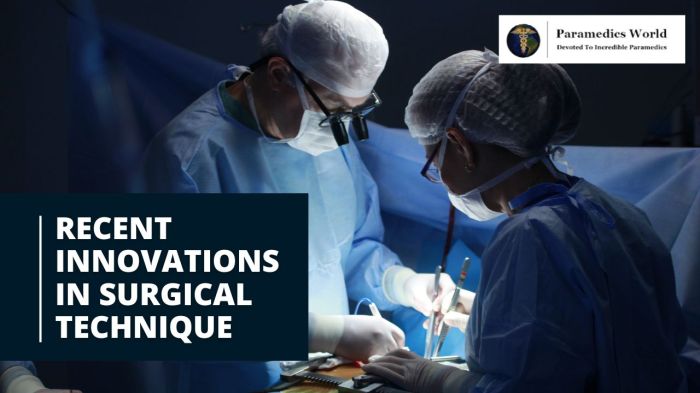
Advancements in technology have revolutionized the field of surgery, paving the way for innovative techniques and tools that enhance patient outcomes. Emerging technologies such as 3D printing, virtual reality, augmented reality, and artificial intelligence are shaping the future of surgical procedures.
Impact of 3D Printing on Surgical Planning and Implant Development
- 3D printing allows surgeons to create precise models of a patient’s anatomy, enabling them to plan and practice complex surgeries before entering the operating room.
- Customized implants can be designed based on the patient’s unique anatomy, leading to better fit and outcomes.
- 3D printing also reduces surgery time and improves efficiency by providing surgeons with a clear roadmap of the procedure.
Use of Virtual Reality and Augmented Reality in Training Surgeons and Enhancing Surgical Precision
- Virtual reality simulations allow surgeons to practice procedures in a realistic and risk-free environment, helping them hone their skills and improve surgical precision.
- Augmented reality overlays digital information onto the surgeon’s field of view, providing real-time guidance during surgery and enhancing accuracy.
- These technologies contribute to reducing errors, improving outcomes, and increasing patient safety.
Integration of Artificial Intelligence into Surgical Procedures for Improved Outcomes
- Artificial intelligence algorithms analyze data from preoperative imaging, patient records, and real-time surgical feedback to assist surgeons in decision-making during procedures.
- AI can identify patterns, predict complications, and recommend optimal treatment strategies, leading to personalized and precise surgical interventions.
- By enhancing surgical planning, reducing complications, and improving patient recovery, artificial intelligence is revolutionizing the way surgeries are performed.
Advancements in Robotic Surgery
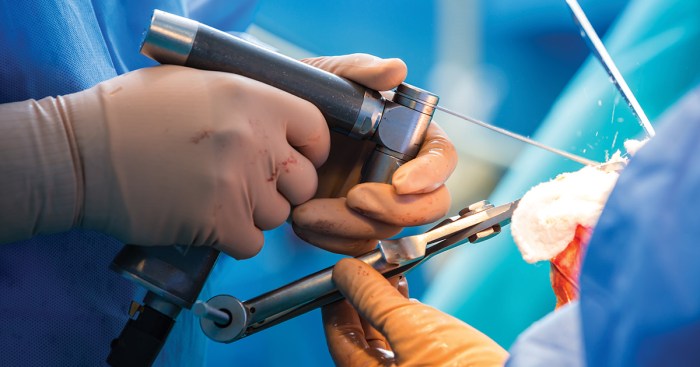
Robotic surgery has revolutionized the field of surgery by providing precision, flexibility, and improved outcomes for patients. The evolution of robotic-assisted surgery has seen the development of sophisticated robotic systems that can be controlled by surgeons to perform intricate procedures with enhanced dexterity and accuracy.
Benefits of Robotic Surgery
- Enhanced precision: Robotic systems allow surgeons to perform complex maneuvers with greater accuracy, reducing the risk of human error.
- Minimally invasive: Robotic surgery often involves smaller incisions, leading to less pain, reduced blood loss, and faster recovery times for patients.
- Improved visualization: High-definition cameras on robotic systems provide surgeons with a clear view of the surgical site, enhancing decision-making during procedures.
Advantages and Limitations
- Advantages:
- Reduced risk of complications
- Precise control in tight spaces
- Less scarring and faster recovery
- Limitations:
- Cost of equipment and training
- Lack of tactile feedback for surgeons
- Dependence on technology that may malfunction
Successful Complex Surgeries
Robotic surgery has enabled surgeons to successfully perform a wide range of complex procedures, including:
- Cardiac surgeries such as mitral valve repair
- Urological procedures like prostatectomies
- Gynecological surgeries including hysterectomies
Enhanced Imaging Techniques in Surgery
Advancements in imaging technologies such as MRI, CT scans, and ultrasound have revolutionized the field of surgery by providing detailed and accurate visualization of the patient’s anatomy. These imaging tools play a crucial role in pre-operative planning, allowing surgeons to better understand the patient’s unique anatomy, identify potential challenges, and develop a precise surgical strategy.
Role of Intraoperative Imaging Tools
Intraoperative imaging tools, such as intraoperative MRI and CT scanners, enable surgeons to visualize real-time images of the patient’s anatomy during surgery. This technology allows for immediate feedback on the progress of the procedure, helps in ensuring complete tumor removal, and assists in making critical decisions on the spot. By providing accurate guidance and enhancing visualization, intraoperative imaging tools contribute to improved surgical outcomes and patient safety.
Future of Imaging Techniques in Surgery
The future of imaging techniques in surgery holds promising potential for further enhancing surgical accuracy and outcomes. Advancements in imaging technology, such as 3D imaging, virtual reality, and augmented reality, are expected to revolutionize how surgeons plan and perform procedures. These advanced imaging techniques offer a more comprehensive view of the patient’s anatomy, allowing for more precise and personalized surgical interventions.
Additionally, integrating artificial intelligence algorithms into imaging analysis can aid surgeons in making quicker and more accurate decisions during surgery, ultimately leading to better patient outcomes.
As we wrap up our exploration of Advances in surgical procedures, it’s evident that the future of surgery is intricately linked with technological innovations that promise better results and improved patient experiences.
Question Bank
How have robotic systems impacted modern surgical procedures?
Robotic systems have enabled surgeons to perform complex surgeries with enhanced precision and control, leading to better outcomes for patients.
What are the benefits of minimally invasive surgical techniques?
Minimally invasive procedures offer advantages such as faster recovery times, reduced risk of infection, and smaller incisions compared to traditional surgery.


